

Outcomes of On-Site Emergency Endoscopy in Non-Transportable Patients with Gastrointestinal Bleeding
Dr. Bolor Otgondemberel

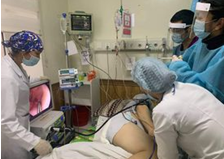
Presenting By: 15th World Endoscopy and GI Conference
Dates: December 17-19, 2025
Venue: Novotel Al Barsha, Dubai, UAE
Name: Dr. Bolor Otgondemberel
Background
Gastrointestinal (GI) bleeding is a significant global health concern, most frequently originating from the upper GI tract. Timely endoscopic intervention remains the cornerstone of both diagnosis and management. However, delivering such care is particularly challenging in countries with vast geographical territories and limited medical infrastructure. In Mongolia, rural populations often reside far from urban healthcare centers, and critically ill or non-transportable patients in remote areas frequently lack access to emergency endoscopic services. This study aimed to evaluate the outcomes of mobile, on-site emergency endoscopy in such patients and to assess the feasibility, effectiveness, and clinical impact of this intervention.
Methods
Since early 2019, our mobile endoscopy team has conducted 928 emergency visits to patients across 15 provinces (aimags) and 6 districts in Mongolia. These visits included cases of GI bleeding, foreign body removal, and urgent diagnostic evaluations. All procedures were performed using portable endoscopic equipment in accordance with standard emergency protocols. This report specifically analyzes 691 cases involving GI bleeding, focusing on the source of bleeding, treatment outcomes, and mortality.

Results
Of the 796 GI bleeding cases, 82% involved upper GI bleeding, while 7% involved lower GI bleeding. The most common source was esophageal varices (64%), followed by fundal varices (11%) and gastric ulcers (21%). Endoscopic hemostasis was successfully achieved in 98% of cases. Despite the clinical severity and delays in some interventions, 15 patients died within 24 hours, 4 patients died within 48 hours resulting in a mortality rate of 1.9%. The primary causes of death included complications related to chronic liver disease, ongoing hemorrhage, hemodynamic instability, and multiple organ failure.
All 19 deaths (100%) occurred in patients with variceal bleeding. In contrast, there were no deaths among non-variceal bleeding cases. This association was statistically significant (p = 0.015), suggesting that variceal bleeding was a major determinant of mortality in our cohort.
Of the 19 deaths observed, 15 (79%) occurred in patients from Ulaanbaatar, while only 4 (21%) occurred in patients from rural areas. This difference was statistically significant (p = 0.0012), suggesting that urban patients experienced higher mortality rates, despite the overall success of interventions in rural areas.

Conclusions
Mobile, on-site emergency endoscopy is a highly effective and feasible approach for managing GI bleeding in non-transportable patients. Our findings highlight that early diagnosis and timely endoscopic intervention significantly reduce mortality, decrease the need for inter-facility transfers, and lower overall healthcare costs.
We advocate for the development of a national integrated emergency endoscopy network to ensure equitable access to life-saving procedures throughout rural Mongolia. Public investment is essential to support mobile infrastructure, centralized data systems, and fair reimbursement policies across all healthcare levels. Additionally, establishing precise clinical criteria for emergency care and aligning treatment protocols with disease progression will further enhance patient outcomes and the efficiency of the healthcare system.
Keywords
Gastrointestinal bleeding; Emergency endoscopy; On-site care; Non-transportable patients; Mobile health interventions; Mongolia; Rural healthcare outcomes.
References (Sample format using Vancouver style)
- Barkun AN, Almadi M, Kuipers EJ, et al. Management of nonvariceal upper gastrointestinal bleeding: guideline recommendations from the International Consensus Group. Ann Intern Med. 2019;171(11):805-822.
- Lau JYW, Yu Y, Tang RSY, et al. Timing of Endoscopy for Acute Upper Gastrointestinal Bleeding. N Engl J Med.2020;382(14):1299-1308.
- Sung JJY, Chiu PWY, Chan FKL, et al. Asia-Pacific Working Group consensus on non-variceal upper gastrointestinal bleeding. Gut. 2011;60(9):1170-1177.
- WHO. Strengthening health systems to improve health outcomes. Geneva: World Health Organization; 2007.
- Mongolian Ministry of Health. Health indicators 2022. Ulaanbaatar: MoH; 2023.
Speaker Page: https://endoscopy-gi.utilitarianconferences.com/speaker/dr-bolor-otgondemberel
Our Upcoming Conference: 16th World Endoscopy, GI Conference & Exhibition from December 14-16, 2026, in Dubai, UAE
Visit our home page here: https://endoscopy-gi.utilitarianconferences.com/
Registration here: https://endoscopy-gi.utilitarianconferences.com/registration
Submit Abstract: https://endoscopy-gi.utilitarianconferences.com/submit-abstract
Virtual Registration: https://endoscopy-gi.utilitarianconferences.com/virtual-registration
Exhibitor Registration: https://endoscopy-gi.utilitarianconferences.com/exhibitor-registration
Sponsor Registration: https://endoscopy-gi.utilitarianconferences.com/sponsor-registration


